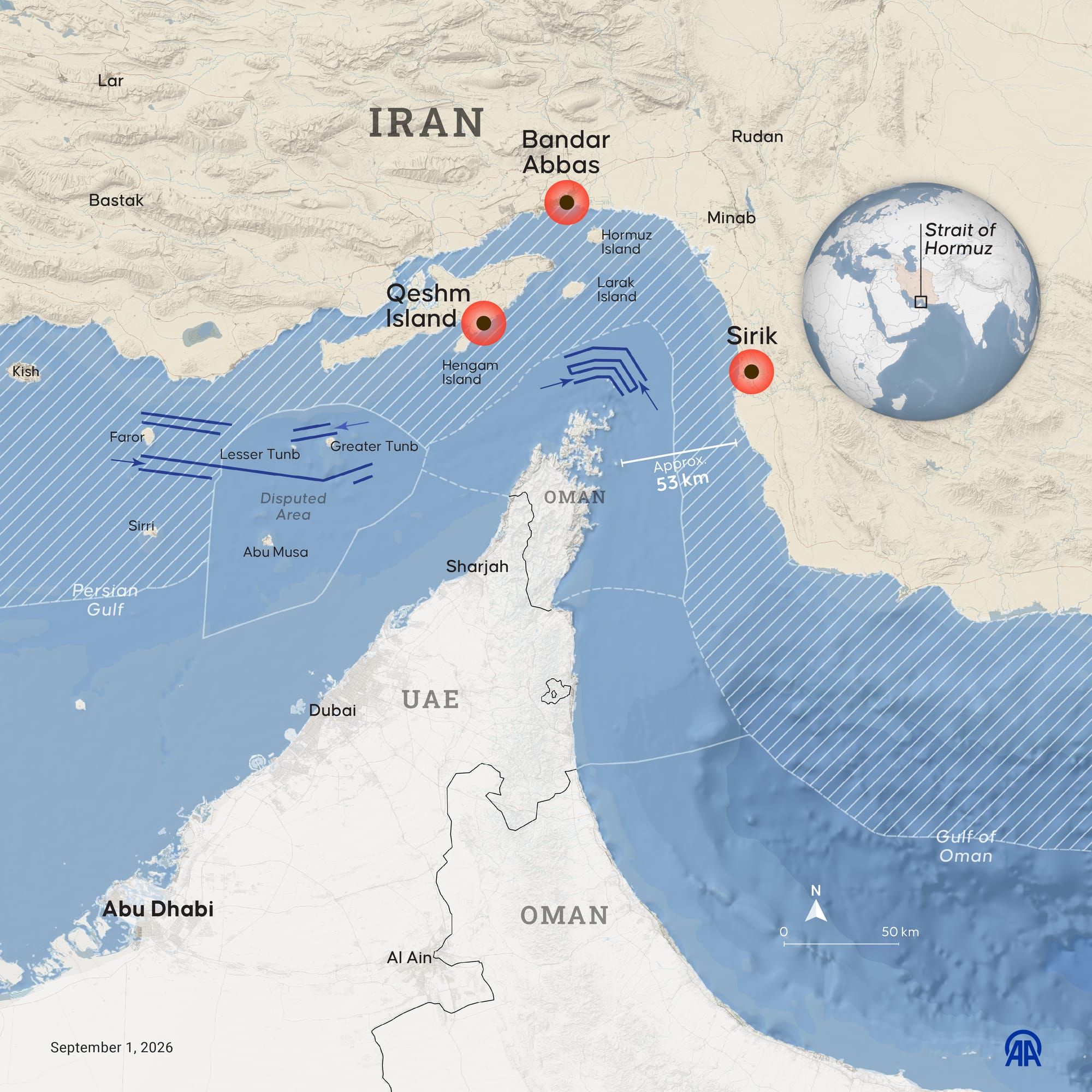
Insuring a tanker to cross the Strait of Hormuz now costs between 7.5 and 10 percent of the ship’s value. Before the war it was 0.25 percent.
For a five-year-old VLCC worth around $138 million, that turns a routine cost into a multi-million-dollar bill for a single passage. The National ran the numbers on a $100 million tanker: a war risk premium that used to be about $250,000 is now $3 million to $10 million — same ship, same route, same cargo.
How it happened
Before the fighting, Hormuz transits sat around 0.25 percent of hull value. Within a week of escalation in early March, quotes moved to 1–3 percent after the Joint War Committee reclassified the strait as a listed area, which triggers automatic repricing across the market. By late July, with Iran hitting tankers routing through Omani waters, Marsh’s global head of marine told S&P Global rates had jumped again to 7.5–10 percent. The IMO counted eight ships hit in a single week that month.
UNCTAD data showed shipping through the strait down 97 percent after the war began. Oil volumes fell 86 percent within a day of the first strikes. Before the war about 20 million barrels crossed daily.
Why they haven’t fallen
Insurance markets price forward. Even during the June ceasefire window, premiums didn’t follow conditions — an analyst quoted by The National said market pricing wasn’t adjusting as things improved. Underwriters priced for the war continuing.
Marsh’s Marcus Baker said global hull capacity runs $2.5–3 billion and most vessels crossing Hormuz are worth under $100 million, so the market could cover them many times over. But underwriters increasingly won’t offer spot terms at any price. Baker warned the market could pull back from offering cover entirely.
Howden Re describes what’s happened across the Red Sea in 2024–25 and Hormuz this year as permanent structural repricing — a new baseline, not a spike. At least seven tankers have been hit, implying industry losses near $1.75 billion before cargo.
Who pays
Shipowners don’t absorb it. War risk premiums pass to charterers through freight rates, and charterers add freight and insurance to the delivered price of crude.
There’s a second toll closer to the strait. Iran set up the Persian Gulf Strait Authority to charge vessels for passage, reportedly up to $2 million a ship, roughly a dollar a barrel. The US has sanctioned it, so paying Iran to cross could expose an operator to sanctions later.
About 6,000 seafarers have been stuck in the region, with the IMO working to get stranded vessels out. At least a quarter of non-Iranian ships trapped since the conflict began have made it out.
Comments